There is a particular kind of loneliness that comes with becoming old-fashioned while you are still alive, still working, still creating.
For P. Ramlee, that loneliness arrived through sound.
For much of the previous two decades, he had been one of the principal architects of modern Malay popular music. His musical world was expansive: asli modes could sit comfortably beside jazz, mambo and Latin rhythms; poetic pantun could be carried by elaborate arrangements; and the studio orchestra could become part of the emotional architecture of a song.
Then, quite suddenly, the centre of gravity moved.
A younger generation, born after the Second World War and growing up in a newly independent and increasingly urban region, wanted something different. They wanted electric guitars, combo organs and the insistent backbeat of British beat music.
And increasingly, the culture around them wanted a new generation to embody it.
Ramlee, now entering his forties, found himself on the wrong side of a cultural dividing line that had not existed when he built his career.
What made the change especially painful was that he had never been opposed to modernity. Much of his own career had been built on absorbing outside influences and transforming them into something recognisably his own.
The Kugiran Arrives
The phenomenon that came to be known as Pop Yeh Yeh swept through Singapore and Peninsular Malaysia between roughly 1965 and 1971.
Its name itself reflected the new cultural climate. The phrase was adapted from the refrain of The Beatles’ She Loves You, while the movement was driven by the kugiran—short for kumpulan gitar rancak, a term popularised by radio announcers.
Groups such as The Swallows and The Siglap Five, together with singers including M. Osman, A. Ramlie and J. Sham, became part of this new musical landscape.
The difference was not simply a matter of taste.
Ramlee’s kind of recording depended on a substantial musical infrastructure. A large arrangement could require numerous session musicians, specialist arrangers and long hours in a proper studio balancing the sound. The music was expensive because it was elaborate.
They could walk into a studio, plug their instruments into amplifiers and record quickly. An entire four-song EP could be completed in an afternoon.
That efficiency mattered enormously in a changing market.
The new sound was not only younger. It was cheaper, faster and easier to produce.
And its subject matter spoke directly to the people buying it.
Pop Yeh Yeh songs were often straightforward and conversational. They dealt with teenage romance, youthful anxieties and the pleasures of modern consumer life. They sounded like the world young Malaysians were beginning to inhabit.
Ramlee’s music was more layered. His melodies could be harmonically sophisticated, his lyrics shaped by the traditions of pantun, and his songs often carried moral or social observations beneath their surface.
To younger urban listeners, that language could suddenly feel like the language of their parents.
The irony is that Ramlee had helped create the modern musical world in which this new generation was growing up. He had spent his career taking influences from elsewhere and making them part of Malay popular culture.
But there was a limit to the kind of modernity he was prepared to embrace.
He could experiment with Western forms. He could adapt them, reshape them and make them his own. What he resisted was the idea that musical sophistication should simply be stripped away in favour of speed, volume and immediacy.
The marketplace, however, was not necessarily rewarding sophistication.
And Ramlee’s musical language was increasingly caught between two eras.
The Door Closes at EMI
The cultural shift became much more consequential when the record industry made its own decision.
For almost twenty years, Ramlee’s relationship with The Gramophone Company, later HMV and EMI, had been a major part of the commercial life of his music. His recordings had circulated widely through Singapore, Malaya, Sabah, Sarawak and Indonesia.
But institutions change when their calculations change.
By late 1968 and into 1969, EMI was looking at the numbers. Sales of Ramlee’s recent recordings, with their more elaborate orchestration, had plateaued. At the same time, inexpensive Pop Yeh Yeh EPs were selling rapidly across the region.
When Ramlee’s multi-year recording contract came up for renewal, EMI chose not to extend it.
The end of the contract meant the disappearance of advances that had provided important working cash. He had been able to draw against future releases, using that income to manage the expenses of a large household.
The termination also cut him off from the high-quality recording facilities that had supported his work. Without label backing, he was increasingly dependent on ad-hoc radio recordings at RTM or lower-fidelity magnetic tape arrangements.
There was a deeper message in the decision as well.
The recording industry was no longer treating P. Ramlee as the future.
Marketing money was moving toward teenage pop acts. The industry had found its new audience, and it was willing to leave one of the architects of modern Malay popular music behind.
When “Lapuk” Became a Weapon
The rejection did not remain inside recording studios and corporate offices.
Entertainment journalism in Kuala Lumpur was changing along with the culture it covered. Publications such as Utusan Filem & Fesyen, Varia Filem and Mastika Filem, as well as entertainment columns in the daily newspapers, were increasingly shaped by sensationalism and youth-oriented coverage.
Ramlee’s public image began to change with it.
Ada satu jenis kesunyian yang tiba apabila seseorang menjadi lapuk sedangkan dia masih hidup, masih bekerja, masih mencipta.
Bagi P. Ramlee, kesunyian itu tiba menerusi bunyi.
Sepanjang dua dekad sebelumnya, beliau antara arkitek utama muzik popular Melayu moden. Dunia muziknya luas: laras asli boleh duduk selesa bersebelahan jaz, mambo dan rentak Latin; pantun boleh dipikul susunan muzik yang rumit; dan orkestra studio boleh menjadi sebahagian daripada binaan emosi sesebuah lagu.
Kemudian, secara tiba-tiba, pusat graviti itu berpindah.
Satu generasi muda, lahir selepas Perang Dunia Kedua dan membesar di rantau yang baharu merdeka serta semakin bandar, mahukan sesuatu yang berbeza. Mereka mahukan gitar elektrik, organ kombo dan rentak backbeat muzik beat British yang mendesak.
Dan budaya di sekeliling mereka semakin mahukan generasi baharu untuk mewakilinya.
Ramlee, ketika itu menjejak usia empat puluhan, mendapati dirinya berada di sebelah yang salah pada satu garis pemisah budaya yang belum wujud ketika beliau membina kerjayanya.
Apa yang menjadikan perubahan itu amat memedihkan ialah beliau tidak pernah menentang kemodenan. Sebahagian besar kerjayanya sendiri dibina dengan menyerap pengaruh luar lalu mengubahnya menjadi sesuatu yang jelas miliknya.
Kugiran tiba
Fenomena yang kemudiannya dikenali sebagai Pop Yeh Yeh melanda Singapura dan Semenanjung Tanah Melayu kira-kira antara 1965 hingga 1971.
Namanya sendiri mencerminkan iklim budaya yang baharu. Ungkapan itu diambil daripada rangkap ulangan lagu She Loves You nyanyian The Beatles, manakala gerakannya digerakkan oleh kugiran — singkatan bagi kumpulan gitar rancak, istilah yang dipopularkan juruhebah radio.
Kumpulan seperti The Swallows dan The Siglap Five, bersama penyanyi termasuk M. Osman, A. Ramlie dan J. Sham, menjadi sebahagian daripada lanskap muzik baharu itu.
Perbezaannya bukan sekadar soal citarasa.
Rakaman jenis Ramlee bergantung pada prasarana muzik yang besar. Satu susunan muzik yang luas boleh memerlukan ramai pemuzik sesi, penyusun pakar dan berjam-jam di studio yang betul untuk mengimbangi bunyinya. Muzik itu mahal kerana ia rumit.
Kugiran pula boleh masuk ke studio, memasang alat ke amplifier dan merakam dengan pantas. Sebuah EP empat lagu boleh disiapkan dalam satu petang.
Kecekapan itu amat bermakna dalam pasaran yang sedang berubah. Bunyi baharu itu bukan sekadar lebih muda. Ia lebih murah, lebih pantas dan lebih mudah dihasilkan.
Pintu EMI tertutup
Perubahan itu bukan sekadar soal khalayak. Ia soal perniagaan. Syarikat rakaman mengikut wang, dan wang berpindah kepada kugiran. Katalog yang dahulunya menyokong muziknya tidak lagi melihat gunanya.
Bagi seorang lelaki yang selama dua puluh tahun tidak pernah kesukaran mencari studio, penutupan pintu itu bukan penghinaan yang lantang. Ia sekadar panggilan telefon yang tidak berbalas.
Apabila “lapuk” menjadi senjata
Penolakan itu tidak kekal di dalam studio rakaman dan pejabat korporat sahaja. Ia mula muncul dalam akhbar. Kewartawanan hiburan di Kuala Lumpur sedang berubah seiring budaya yang dilaporkannya. Penerbitan seperti Utusan Filem & Fesyen, Varia Filem dan Mastika Filem, serta ruangan hiburan dalam akhbar harian, semakin dibentuk oleh sensasi dan liputan berorientasikan anak muda. Imej awam Ramlee mula berubah bersamanya.
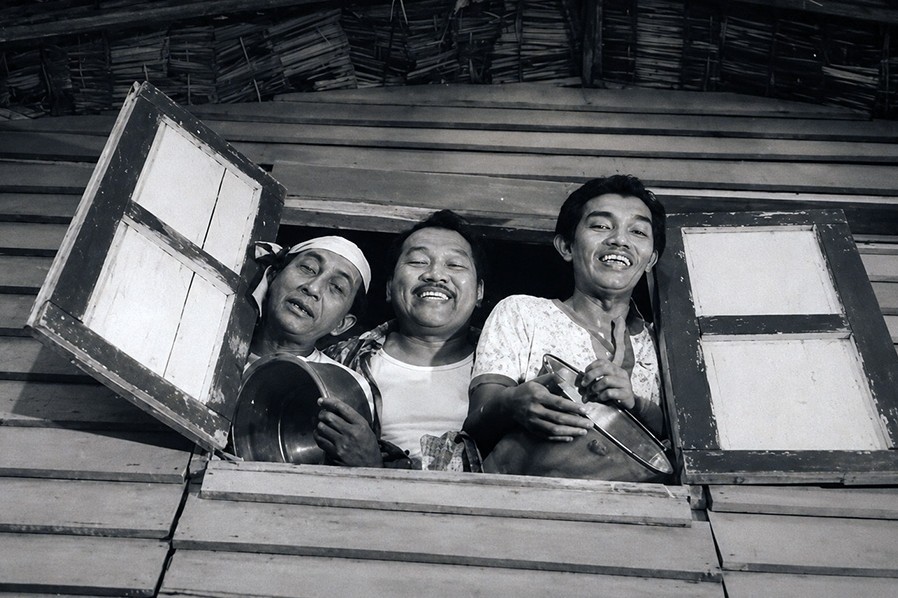
Perkataan lapuk ialah perkataannya sendiri. Beliau menggunakannya sebagai jenaka, dalam judul filem yang menjadikan tiga lelaki menganggur sebagai wira. Kemudian akhbar mengambilnya dan menggunakannya terhadap dirinya, tanpa jenaka.
Akhirnya penolakan itu berpindah daripada halaman bercetak ke dalam bilik tempat Ramlee sentiasa paling terdedah: pentas. Antara 1969 dan 1972, Ramlee dan Saloma kerap ditempah untuk konsert amal, pesta ria dan persembahan pelbagai di Kuala Lumpur, Ipoh dan Pulau Pinang, bersama kumpulan pop elektrik yang lebih baharu. Ia susunan komersial yang jelas. Letakkan bintang lama dan bintang baharu pada bil yang sama, lalu tariklah semua orang. Namun kontrasnya boleh menjadi kejam.
Perkara paling sukar dalam tempoh ini bukanlah mana-mana satu penolakan. Ia himpunannya. Syarikat rakaman yang dahulu menyokong muziknya sudah tiada. Akhbar semakin menggambarkannya sebagai ketinggalan zaman.
Dan sepanjang tempoh itu beliau terus bekerja — terus mengarah, terus menggubah, terus merakam — kerana itulah satu-satunya perkara yang pernah dilakukannya.